
Car Jam Solver: Traffic Jam
Ladaneta GamesPuzzle
4.81.69K Reviews
- Version
- 1.78
- Installs
- 10.00M
- Age Rating
- Everyone
Screenshots
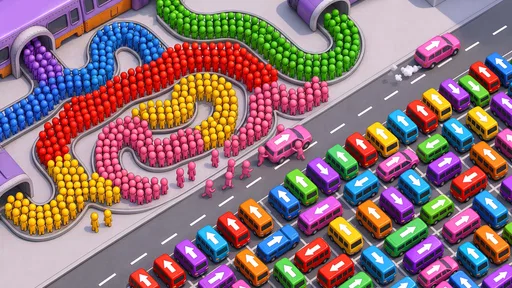
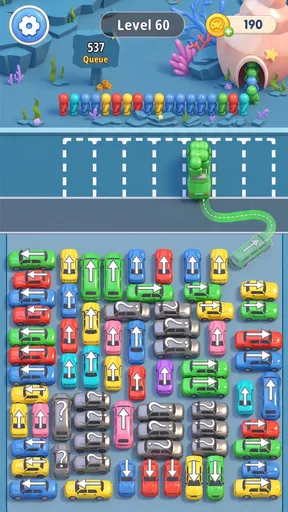
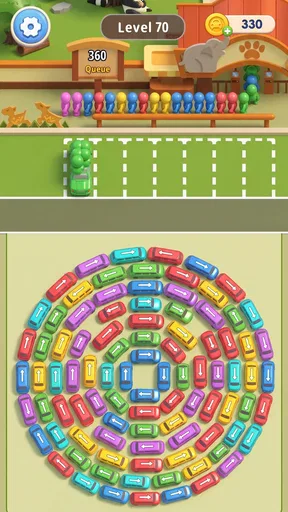


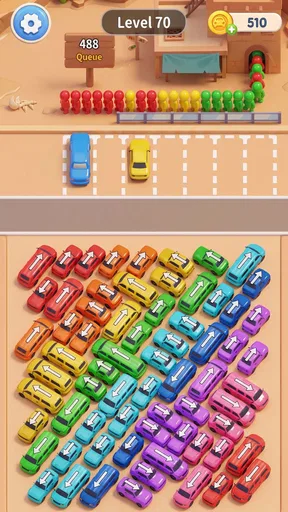
Our Review of Car Jam Solver: Traffic Jam
 Analysis by Appyee
Car Jam Solver: Traffic Jam is the kind of puzzle game I can open for a quick mental reset and still find myself studying the next board a few minutes later. Its central idea is easy to understand: cars are packed into a difficult arrangement, and I need to sort the traffic so the vehicles can leave in the right order. That simple setup gives the game an immediately readable identity, while the changing layouts provide the reason to keep playing.
I reviewed it as a mobile puzzle rather than as a driving simulator. That distinction matters. There is no need to learn steering, braking, or road rules here; the challenge is spatial planning, patience, and recognizing which move will free the board instead of making it tighter. The result is approachable enough for casual sessions, but it still creates those familiar puzzle moments when an apparently harmless tap ruins the position and forces me to rethink everything.
The game comes from Ladaneta Games and sits in the puzzle category. It is free to install, suitable for Everyone, and supports Android devices running version 6.0 or later. Its current version is 1.78, and its popularity is clear from an average rating of 4.8, more than 275 thousand ratings, and over 10 million installs. Those figures do not replace personal testing, but they do match my impression that the concept is easy for a broad audience to pick up.
How the first few boards establish the mood
My first impression was shaped less by complexity than by clarity. A car-jam puzzle works best when I can understand the board at a glance, identify the blocked vehicles, and begin forming a plan without stopping to decode a complicated interface. Car Jam Solver: Traffic Jam benefits from that direct premise. The cars are not just decoration; they are the pieces, the obstacles, and the visual explanation of the problem all at once.
The setting also gives the game a more playful personality than an abstract grid puzzle. Instead of moving anonymous tiles across numbered squares, I am dealing with a crowded parking or traffic arrangement. That framing makes each level feel like a small scene with a practical objective: create enough space, release the right vehicle, and avoid turning a manageable jam into a worse one.
I particularly like how quickly the game communicates its intended pace. It does not ask me to settle in for a long narrative introduction or learn a large collection of systems before the puzzle begins. That makes it a good companion for short breaks, waiting rooms, or those moments when I want something interactive but do not want to remember a complicated story. The trade-off is that players looking for a rich campaign, character development, or a strong sense of exploration will not find those priorities here.
The free entry point is another practical advantage. I can try the basic experience without committing money first, which is important for a game built around a very familiar puzzle idea. In-app purchases range from $0.99 to $49.99 per item, so I would recommend checking the purchase prompts carefully if I were handing the phone to a child. The Everyone content rating makes the game broadly accessible, but age suitability and spending control are separate considerations.
A visual language built around readable traffic
The art direction works because it keeps the vehicles and their positions at the center of attention. In this type of puzzle, decoration can easily become a problem: if the road surface, scenery, or car designs compete with the available paths, the board becomes tiring to read. Here, the traffic-jam setting gives the visuals a coherent purpose. I am always looking at the arrangement as a puzzle first, while the colorful vehicle presentation keeps it from feeling like a sterile logic exercise.
That balance is important during difficult layouts. When several cars are close together, I need to distinguish their orientation and understand which spaces are genuinely open. A strong visual hierarchy helps me make that judgment quickly. The game’s appeal comes from seeing the board as a miniature traffic situation rather than as a collection of unrelated blocks, and that makes the act of clearing it feel more satisfying.
The world is intentionally compact. I would not describe it as a broad, explorable environment; it is a series of focused traffic scenarios. That limitation is also part of its strength. The game does not pretend to offer a large fictional universe, so the visual setting can concentrate on the one thing that matters: the pressure created by too many cars sharing too little room.
One useful habit I developed was to pause before touching anything and trace the likely exit route of each vehicle. The colorful presentation can tempt me to react to the most obvious car, but the important piece is often the one that is blocking access to a larger section of the board. I get better results when I read the whole arrangement as a traffic system instead of moving whichever car looks easiest to release.
That is one of the less obvious strengths of the presentation: it encourages planning without needing a long tutorial. The cars provide visual clues about direction and obstruction, and the jam itself explains why a careless move matters. For players who learn best by seeing relationships rather than reading instructions, this is more effective than a heavily text-based introduction.
Sound, rhythm, and the feel of a short session
The game’s mood depends heavily on rhythm. Each puzzle is a contained problem, so the experience naturally moves through a pattern of observation, a few confident moves, a pause when the layout tightens, and relief when the traffic finally clears. That rhythm is more important than speed. I enjoy the game most when I let the board dictate the tempo instead of treating every level like a race.
The traffic theme supports a light, accessible atmosphere rather than a tense or dramatic one. I do not come to this game for a cinematic soundscape. I come for the small feedback loop of making a move, seeing the arrangement change, and deciding whether the new space creates a useful opportunity. The audio and visual framing work best when they reinforce that loop without overwhelming the puzzle itself.
For everyday use, I would treat it as a flexible game rather than something that demands a dedicated uninterrupted session. I can play while taking a short break, stop after solving one board, and return later without needing to remember a plot or a complicated set of objectives. That makes the pacing friendly to mobile habits. It is also why I would not recommend it to someone who wants constant action: the most enjoyable moments come from thinking, not rapid tapping.
A realistic example is a commute or lunch break where I have only a few minutes. I can open a puzzle, inspect the traffic, make a handful of moves, and either finish or leave it for later. If I am tired, the game still gives me a clear visual task. If I am in the mood for deeper concentration, I can slow down and search for a sequence that avoids unnecessary blockage. That range is a meaningful part of its usefulness.
The limitation is that the same compact rhythm can become repetitive for players who need a strong change of scenery. The traffic-jam idea is consistent, and consistency helps the game feel coherent, but it also means the atmosphere is not constantly reinventing itself. I would choose a narrative puzzle, a physics game, or a larger strategy title instead if variety of setting and sustained progression mattered more to me than quick, focused boards.
Why the mechanics fit the setting
The central mechanic and the theme belong together naturally. Cars are difficult to move because they occupy shared space, and the traffic setting gives that spatial restriction an intuitive explanation. I do not need an elaborate story to understand why one vehicle cannot simply pass through another. The board communicates the rules visually, which keeps the learning curve gentle while leaving room for mistakes.
What makes the puzzles engaging is not the act of moving a car by itself. It is the order of operations. A vehicle that appears ready to leave may depend on another car moving first, while a tempting early move can consume the space needed for a later escape. I found that the best approach was to identify bottlenecks: narrow areas where one vehicle controls access to several others. Clearing those points usually matters more than making immediate progress with a car near the exit.
Another practical technique is to separate “safe” moves from “committing” moves. A safe move creates space without closing an important route. A committing move sends a vehicle into a position that may restrict the remaining board. When I am unsure, I look for the safe move first and preserve flexibility. This is a small change in thinking, but it prevents the common mistake of chasing the first visible solution and discovering too late that the rest of the traffic has become immovable.
The game is also a good test of whether I can resist unnecessary action. In many mobile games, tapping quickly feels productive. Here, extra movement can be the source of the problem. I get more enjoyment when I treat every car as part of a sequence and ask what the board will look like after the move, not only whether the selected vehicle can move right now.
Compared with a traditional match-three puzzle, this feels less dependent on chance and more dependent on deliberate positioning. Compared with a classic sliding-block puzzle, the traffic theme makes the objective more immediately relatable and visually inviting. Compared with a driving game, it removes reflexes and replaces them with planning. Those differences make it a strong choice for someone who wants a recognizable everyday setting but prefers calm logic over speed or simulation.
It is not the right choice for every puzzle fan. Players who want wordplay, numerical deduction, hidden-object searching, or physics experimentation may find the car-sorting format too narrow. It may also frustrate anyone who dislikes replaying a position after a poor decision. I personally see that friction as part of the challenge, but it is worth knowing that the game rewards careful observation more than spontaneous experimentation.
Practical considerations before installing
Because the game is free, the easiest way to judge it is to install it and see whether the traffic-board format suits my attention span. The minimum Android requirement of 6.0 makes it available to a wide range of devices, although the experience will still depend on the phone’s general condition and screen comfort. The iOS and Android audience can approach the same basic idea as a casual puzzle, but I would still make sure the device has enough battery and storage for regular play rather than assuming every older phone will feel identical.
The purchase range deserves a calm, practical note. Optional spending begins at $0.99 and reaches $49.99 per item. I would leave purchase authentication enabled, especially on a shared device, and decide in advance whether I want to spend on convenience. The game is playable as a free download, but the presence of purchases means I would not treat it as automatically risk-free for younger players.
The developer, Ladaneta Games, has built the experience around a concept that is easy to explain to another person in one sentence. That is useful when recommending it to family or friends: I can say it is a car-arrangement puzzle where the goal is to untangle crowded traffic, and they will understand the basic appeal immediately. The more important question is whether they enjoy thinking through order and space, because that is where the lasting value sits.
One thing I would do before blaming a level for being unfair is restart my mental plan rather than immediately repeating the same sequence. Look at the cars that control the center, identify the vehicle that must move last or nearly last, and then work backward. This reverse-planning approach is especially helpful when the exit looks obvious but the surrounding vehicles create a chain of dependencies.
I also recommend playing with a deliberate stopping point. Since the boards are short and the visual language is simple, it is easy to keep saying “one more.” That can be pleasant, but it can also turn a relaxing break into a surprisingly long session. The game is at its best when I use its compact design intentionally: one or two puzzles for a reset, or a longer stretch when I genuinely want to concentrate.
Who will enjoy the atmosphere most
I would recommend Car Jam Solver: Traffic Jam to players who like tidy visual problems, short sessions, and a clear connection between theme and mechanics. It is particularly suitable for someone who wants a puzzle that can be understood quickly but still rewards looking ahead. The Everyone rating also makes it a reasonable option for a broad household audience, provided spending controls are handled responsibly.
It works well for casual players who do not want a large commitment. There is no need to memorize a fictional setting, follow a complicated plot, or master a control scheme. The traffic scene gives each board a little personality, while the puzzle rules remain the main attraction. I can recommend it to a friend who enjoys organizing, sorting, and solving spatial problems but does not necessarily identify as a dedicated gamer.
I would be more cautious about recommending it to someone seeking deep strategic systems or a constantly changing audiovisual experience. The coherent mood comes from repeating and refining the traffic-jam idea, not from dramatic shifts in world design. If a player needs a strong narrative hook, competitive multiplayer, or a large sense of progression, another category would probably be a better fit.
The atmosphere verdict after extended play
What stays with me is the way the game turns congestion into a readable, playful problem. The art direction supports the cars without burying the board, the setting gives the puzzle an understandable purpose, and the pacing makes short sessions feel natural. The mood is light, but the mechanics are not empty: a crowded layout can still demand patience, sequencing, and a willingness to undo a bad plan.
The best way to enjoy it is to treat every move as traffic management, not button pressing. When I pause, find the bottleneck, preserve open space, and plan the release order, the game feels much more satisfying than when I simply chase the nearest exit. That approach also reveals its main trade-off: the experience is rewarding because it stays focused, but that same focus may feel repetitive if I need constant novelty.
Overall, I see this as a polished-feeling casual puzzle recommendation for Android players who want a free car-sorting challenge with a friendly atmosphere. Its 4.8 average from around 275 thousand ratings and its audience of over 10 million installs suggest broad appeal, but my recommendation is still conditional on taste. If you enjoy visual logic and compact problem-solving, it is easy to pick up and hard to dismiss after only one board. If you want driving action, storytelling, or a more varied puzzle toolbox, I would look elsewhere. For everyone in between, this is a pleasant way to turn a traffic jam into a small, focused mental workout.
Verdict
Strengths of Car Jam Solver: Traffic Jam
- Simple tap-and-drag controls are easy for new players to understand.
- Short levels make it convenient to play during quick breaks.
- Increasing traffic complexity keeps later puzzles engaging.
- Colorful visuals make cars and obstacles easy to distinguish.
- Offline play is useful when no internet connection is available.
Limitations of Car Jam Solver: Traffic Jam
- Some puzzles may feel repetitive after extended play sessions.
- Difficulty can spike unexpectedly on certain levels.
- Hints or extra moves may be limited without watching ads.
- Frequent advertisements can interrupt the flow between puzzles.
- The game offers limited variety beyond its core traffic puzzles.
Similar Picks in This Category
View All
Block Blast!
HungryStudio4.8

Braindom: Brain Games Test
Lahana Game Studio4.6

AMAZE!
CrazyLabs LTD4.6

Sudoku - Classic Sudoku Puzzle
Oakever Games4.7

Art Puzzle - Puzzle Games
Easybrain4.8

Amaze GO!
Oakever Games4.9
Frequently Asked Questions
What is Car Jam Solver: Traffic Jam, and how is it played?
Car Jam Solver: Traffic Jam is a puzzle game focused on clearing crowded roads and parking areas by moving vehicles in the correct order. Each level presents a traffic layout with blocked cars, limited spaces, and obstacles that require careful planning. You tap or swipe vehicles to guide them out, gradually opening paths until every car has been removed successfully.
Is Car Jam Solver: Traffic Jam suitable for beginners?
Yes, the game is generally easy to understand for new players because its controls are simple and the early stages introduce the main mechanics gradually. However, later puzzles can become considerably more demanding, requiring players to think several moves ahead rather than simply moving the nearest vehicle. It is accessible for casual players but still offers a useful challenge.
Does Car Jam Solver: Traffic Jam work without an internet connection?
Many of the core puzzle levels can usually be played offline, which makes the game convenient for travel or situations without a stable connection. Nevertheless, features such as advertisements, rewards, cloud synchronization, limited-time events, or in-app purchases may require internet access. Availability can vary by version and device, so it is worth checking the game’s current store description.
Are there advertisements or in-app purchases in Car Jam Solver: Traffic Jam?
Car Jam Solver: Traffic Jam may include advertisements, particularly between levels or when players choose optional rewards. Some versions can also offer in-app purchases for removing ads, obtaining hints, unlocking content, or receiving additional resources. The basic gameplay can generally be explored without spending money, but users should review the purchase settings before downloading if they prefer an entirely uninterrupted experience.
What should I do if I get stuck on a traffic puzzle?
When a level becomes difficult, avoid moving vehicles randomly because one incorrect action can block the remaining routes. First, identify which cars have a clear exit and which vehicles are preventing access to them. Use available hints carefully, restart the puzzle when necessary, and look for moves that create space rather than only immediate exits. Patient planning is usually more effective than fast tapping.
Play our best games!


